
Starting Weight: 267 lbs.
Current Weight: 249.6 lbs.
Total Weight Loss: 17.4 lbs.
Goal Weight: 140 lbs.
Pounds to go: 109.6 lbs.
Yesterday was my fourth nutrition appointment with Kaitlyn at St. Mary’s Hospital. This appointment is special in that it marks that we have passed the half way point in this journey. I know that I still have a ways to go, but this feels like an accomplishment.
So on to the appointment.
When I got there and checked in, they asked me to fill out a multiple choice quiz. I was not able to get a copy of the quiz to share with you, so I am going to put down the questions and choices as I remember them. These might not be exact, and are probably not in the correct order.
- 40 days after surgery you can start what kind of diet?
- Liquid
- Puree
- Regular
- Vegetarian
- Approximately how many ounces can your new stomach hold?
- 2 oz.
- 4 oz.
- 6 oz.
- 8 oz.
- What is the appropriate tool to ensure you are not overeating.
- Eyeballing the amount of food you eat
- Using a measuring cup
- Eating until you are full
- Using a food scale
- Which of the following options is a good source of protein?
- Grilled Skinless Chicken Breast
- Fried Chicken Breast
- Baked bone-in skin-on chicken wings
- Frozen Chicken Patty
- Which of the following options are good sources of fiber? (select all that apply)
- Apple
- Avocado
- Broccoli
- Oatmeal
- White Rice
- Of the following nutritional label images, which is the best choice?
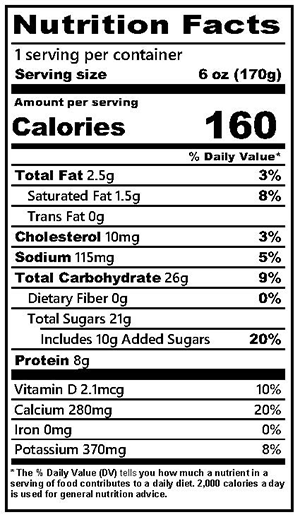
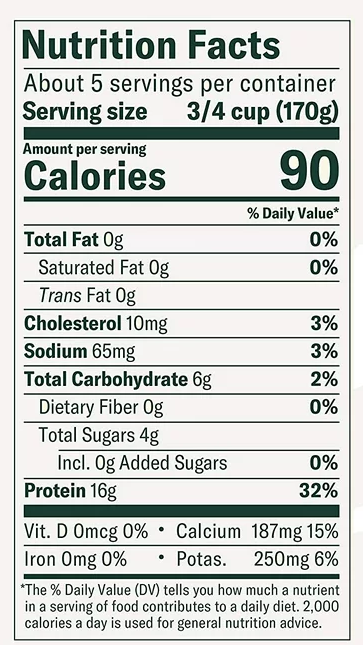
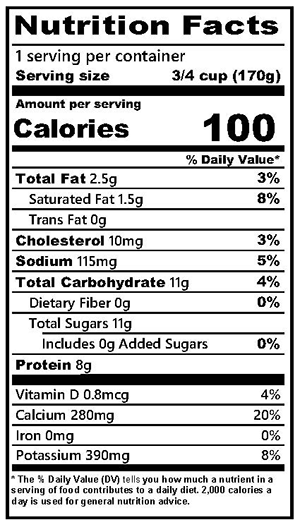
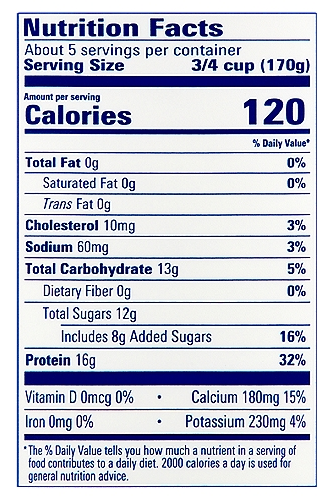
- Which of the following is NOT a calorically dense food?
- 80% lean 20% Fat Ground Beef
- Olive Oil
- Peas
- Peanut Butter
- How long do you have to wait after surgery before you can eat starches?
- 1 month
- 2 months
- 3 months
- 4 months
- 5 months
- What should you NOT do after surgery? (select all that apply)
- Drink with meals
- Drink carbonated beverages
- Get regular exercise
- Eat in front of the television
- What type of diet should you follow post surgery?
- High Carb/Low Fat/High Protein
- Low Carb/Low fat/High Protein
- High Carb/Low Fat/Low Protein
- Low Carb/High Fat/Low Protein
Answer Key:
- Regular
- 4 oz.
- Use a measuring cup (Food Scale is also correct, but not per the answer key)
- Grilled Chicken Breast
- Apple, Broccoli, Oatmeal
- Bottom Left
- Peas
- 3 months (I put 5 months, and the longer you wait the better. 3 months is the minimum)
- drink with meals, drink carbonated beverages, eat in front of the television
- Low Carb/Low Fat/High Protein
Now that we’ve covered that…
After I filled out the quiz, I went and got weighed and had my blood pressure, oxygen, and pulse taken like normal. My pulse was a bit higher than usual, but everything else was normal. The nurse also went over my quiz and noted what was correct and incorrect. She had marked that I got 2 wrong (#’s 3 & 8)
Then, Kaitlyn came in and we reviewed my test. She commented about how I am doing a good job with losing the weight. Since I first started seeing her, I’ve lost 16 lbs. The discrepancy there is that my ‘starting weight’ is from when I first saw Dr. Shetty at my consult, and her starting weight is the first time I saw her. Then, she went over my quiz results with me. As she went through, she pointed out that the two that I had gotten marked wrong were in fact technically correct.
She also commented that she had never seen someone get a 100% on the quiz. This really surprised me, because to me, the quiz was not particularly difficult. Anybody with a basic understanding of nutrition and/or somebody who has done their bariatric research should be able to pass that test with flying colors.
From here, we discussed eating habits post surgery.
The first thing we talked about was the 30-30-30 rule: chew each bite 30 times, take 30 minutes for each meal, don’t drink for 30 min on each side of a meal.
The thing that I like about this is that it’s something that I can practice starting now. Chewing 30 times seems excessive, but she said that chewing that much basically liquifies the food in your mouth and makes it easier to both swallow and deal with not drinking. Taking 30 minutes for each meal I think will be fairly easy. All I need to do is make sure that I put down my fork in between bites-AND chewing 30 times each bite will take forever.
The no drinking for 30 minutes on each side of a meal is going to be much harder. It is very cultural to eat and drink at the same time, so we have become extremely accustomed to having liquids with meals. Kaitlyn explained it to me like this…if we don’t wait 30 minutes before we eat, our stomach is full of liquid instead of full of food, so we don’t get enough nutrients when we eat. When we drink 30 minutes after we eat the liquid pushes the food into our small intestines before it has had enough time to digest. I mean, this makes a lot of sense. I do think that we often use drink to help us swallow food that we haven’t chewed enough, so if I follow the 30 chews per bite rule, it should not be an issue.
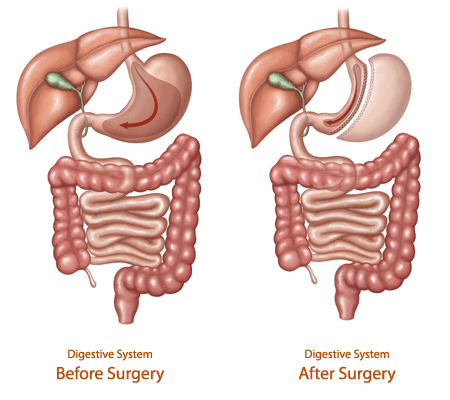
The other important thing that she brought up for mealtimes was avoiding distractions. This means no eating in front of the TV or while doing other things. I know that we all have a tendency to eat while doing things so that we end up mindlessly eating. The problem with mindlessly eating is that it is extremely easy to overeat, which obviously is problematic.
Since we were speaking about how food moved through our intestinal system, I brought up how many people experience constipation after surgery. I asked how she suggested I deal with that inevitability. Kaitlyn explained that especially because the first few weeks are liquid only, bariatric patients get very little fiber or fat, so its much harder to poop. She suggested that I take benefiber to help solidify things, and then MiraLAX to help move things along. She also said that this may happen more than just right after surgery.
The next thing that she told me was that I should start working on lowering my portion sizes. She said to start by making my starches smaller by 2 oz each meal. This means that I have to be much better about measuring my food-especially at dinner. Breakfast and lunch are much easier because I don’t eat a ton of starches at either of those meals usually.
To add to this, I should start tracking my macronutrients so that I can be ready to do that post surgery. She explained that the most important thing was tracking my protein, but having a good idea of my fats and carbohydrates I’m sure will be important as well-especially at the start
Next, we talked about after surgery was vitamins. Post surgery our stomachs can not handle pills like it used to, so we need to find alternatives. Regular pills can be scored and broken to make them small enough to digest. She said they needed to be smaller than a dime. However, capsules are extremely difficult and if we can find an alternative, then we could open the capsule over a small bite of sugar free applesauce (which is the only exception to the no food rule).
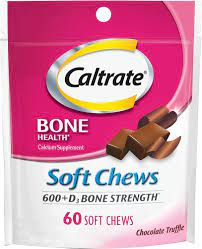
The important things that we need to take are a multivitamin, Vitamin B12 and Calcium. The multivitamin needs to be chewable (but not a gummy) and she suggested Flintstones chewable vitamins. For B12 it needs to be either sublingual (under the tongue) or a drop. Calcium can be a chewable, and she suggested Caltrate. She said that it was extremely important to take the B12 separately from the other vitamins, so take the multivitamin and the B12 in the morning and the calcium later in the day.

The last thing that I asked about was exercise. Since I am planning on having surgery in the summer, I asked about swimming. My entire family enjoys swimming, so being able to go into the pool would be a good option for exercise for me. She told me that I need to not submerge my stitches for 2 weeks. I am assuming because I will have dissolvable stitches. She also said no weight lifting or core work for 3 weeks.
So what’s next? Well I have my last psychiatrist evaluation on Tuesday, and then I have 2 more nutrition appointments, one more quiz, and my upper endoscopy-which has not been scheduled yet. I expect the endoscopy will get scheduled on Monday.
Once I have completed all of this-hopefully the first week of April-they will send everything off to my insurance company and wait for approval. Once I’m approved, we can schedule my surgery. Right now, I’m hoping for the end of June so that I can still enjoy attending my friends wedding.
So that’s where we are my friends. I will speak to you soon.
 Vanishing Velez
Leave a comment